I have been handling lab and industrial equipment orders for six years. In that time I have personally made and documented twelve significant buying mistakes, totaling roughly $28,000 in wasted budget. Most of them came from one habit: comparing quotes by unit price.
This article is the comparison I wish someone had shown me in 2019. It is low-bid buying versus total-cost buying. I will use examples from Corning pipettes, an HPLC double stranded RNA BIA workflow, a laser distance sensor purchase, and the Fluke vs Flir thermal cameras question.
The question everyone asks is what is your best price? The question they should ask is what does that price include? What I mean is that the quote is the first chapter of a long book. Shipping, documentation, storage, calibration, rework, and delay costs all get written in later.
The Comparison Framework: Low Bid vs Total Cost
I compare purchasing decisions across four dimensions: sticker price, hidden costs after unboxing, time costs, and risk costs. In that order. A low-bid buyer stops after the first dimension. A total-cost buyer uses all four.
Dimension 1: Sticker Price
Sticker price is the easiest number to compare. It is also the most misleading.
Back in 2021, I priced a standing order for a large lot of disposable plastics. The lowest quote was 18% below the quote I had prepared for Corning serological pipettes. It was a real quote from an approved supplier, not a random online listing. My manager pushed me to accept it. On paper, the low-bid product looked equivalent: same size, same graduations, same stripe, same packaging style.
We accepted it. Then the trouble started.
Dimension 2: Hidden Costs After Unboxing
Hidden costs are the expenses you only discover after the package arrives. I have a list of them from my own mistakes.
Corning Serological Pipettes and the Certificate Problem
The low-bid pipettes came with almost no paperwork. No certificate of analysis, no lot-specific documentation, no information about sterilization validation. Our QC lead refused to release the batch without extra verification. That verification took three days and involved outside testing.
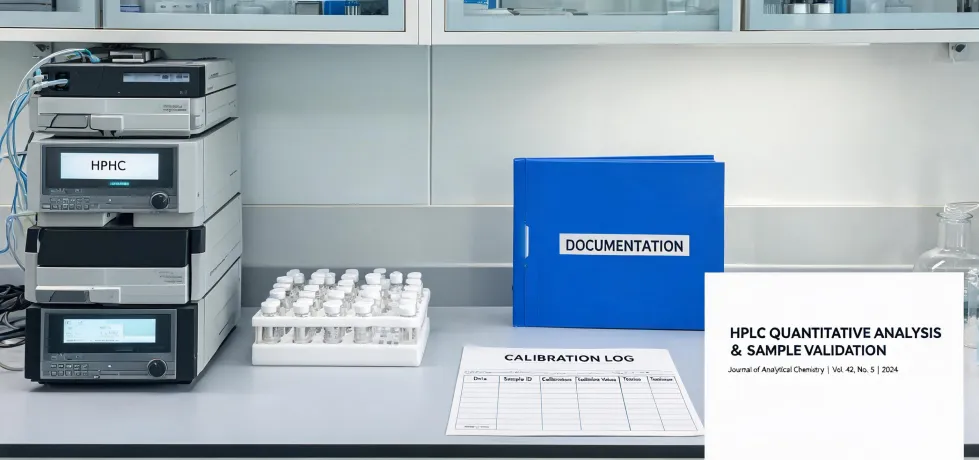
If your lab runs an HPLC double stranded RNA BIA, you already know why this matters. That kind of method is sensitive to additives, leachables, and contamination. A pipette that looks clean can introduce a trace amount of something that does not show up until after the run is finished. Then you are repeating the run, not because the instrument failed, but because a disposable plastic part lacked traceability.
Corning pipettes are not magic. But their documentation is a feature. Features cost money. The low-bid quote was lower; the total cost was higher.
The Laser Distance Sensor That Wasn't Cheaper
I saw the same pattern with a laser distance sensor in 2023. A maintenance team found a laser distance sensor for almost half the price of the name-brand option. The measuring range matched the spec sheet perfectly. Everyone high-fived.
Then they opened the box. The mounting thread did not match the existing bracket. The team spent two weeks machining an adapter. Then the adapter had to be tightened with a special tool, so they made a second adapter. By the time the sensor was installed, the total cost was higher than the sensor they had chosen not to buy.
The question was never which laser distance sensor is cheaper? It was what else do I need to buy, build, or wait for before this one works?
Dimension 3: Time and Delay Costs
Time is a cost, even when it does not show up on the invoice. The Fluke vs Flir thermal cameras debate taught me this.
Everyone compares thermal cameras by resolution and temperature range. Those matter. But in practice, the bigger cost difference is in the operational details: calibration turnaround, software license terms, file format compatibility, service center location, and spare parts availability.
One team we advised bought a Fluke thermal camera because the service center 30 minutes away could calibrate it in 48 hours. Another team bought a Flir thermal camera because their in-house analysis workflow used Flir's free software and they did not want to pay a recurring license. Both teams made the right decision for their context.
When someone asks me Fluke vs Flir thermal cameras, I answer with another question: if the camera dies during a project, how much does your project cost per day? If a two-week calibration return stalls a production line, the camera with the lower sticker price can easily become the more expensive one.
Dimension 4: Risk and Reputation Costs
Risk costs are the ones you only notice after something goes wrong.
In 2022, I managed a $3,200 order where every single item got rejected by incoming inspection because the packaging spec was wrong. The supplier corrected it, but the timeline slipped by a week. My team had to explain the delay to a customer who had done nothing wrong. That credibility damage is impossible to show on a purchase order.
There is an old belief that labware is labware, and a tube is a tube. That thinking comes from an era when most suppliers used similar molds and similar raw materials. That has changed. Resin formulations, mold release agents, sterilization methods, and documentation standards all vary. For regulated work, that variation is not theoretical.
The Checklist I Use Now
After my third expensive mistake, I created a pre-purchase checklist. Three things: confirm the unit price is complete. Ask what documents come with the shipment. Calculate the cost of a one-week delay. In that order.
- Unit price - This is only the starting point. Check whether shipping, handling, and minimum order quantities are included.
- Documentation - Lot numbers, certificates, expiration dates, and ISO 8655 calibration data where applicable. For consumables like Corning serological pipettes, lot traceability matters before the box arrives.
- Delay cost - Add labor, overhead, and downstream commitments per day. A laser distance sensor that needs an adapter is no longer a bargain.
If buying the cheapest part means spending three extra days to prove it is good enough, the cheapest part is a tax on your own time.
So Which Way Is Right?
Buy on sticker price when the work is low-risk, the specs are simple, and you can absorb a failure without missing a deadline. For a one-off measurement with no downstream impact, the low bid is often fine.
Buy on total cost when your process is regulated, your timeline is tight, or your customer will not accept rework. In those situations, established options like Corning pipettes tend to win even when the initial quote is not the lowest. The same logic applies to sensors, cameras, and everything else that touches your workflow.
There is something satisfying about a month with zero emergency orders. After the forced upgrades, late shipments, and awkward conversations with project leads, finally reaching that point is the real payoff. It did not come from finding the cheapest vendor. It came from calculating total cost before the purchase, not after.