When I first started as a quality inspector at a biotech lab, I assumed lab consumables were commodities. Centrifuge tubes, filter units, pipette tips—they're molded plastic, right? Buy the cheapest, save the budget, and spend the savings on something that matters.
I was wrong. Not in a small, theoretical way—in a "who approved that purchase order" way. So let me state my position plainly: the cheapest lab consumables are rarely the cheapest option in the long run. I've reviewed roughly 200 batches of labware a month for four years, and I rejected about 8% of first deliveries in 2024 for dimensional issues, sterility concerns, or packaging damage. The pattern behind those rejections is too consistent to ignore.
What the Price Premium Actually Buys
People hear "Corning" and assume the extra cost is a logo tax. I used to think that too. Then I started measuring things.
We use a portable CMM—a small coordinate measuring machine—to verify dimensions on incoming consumables. It's a quick check: set the part on the stage, probe a few points, compare against spec. When we run that check on budget centrifuge tubes, the results spread all over the place. On one shipment of supposedly "compatible" 50ml tubes, the outer diameter varied by up to 0.4mm from the documented spec. Lot-to-lot variance was wider than the supplier's own tolerance statement.
Does a 0.4mm variance matter? Sometimes it doesn't. In a swing-bucket rotor at low speed, probably fine. But in a fixed-angle rotor at high speed, uneven tube diameters mean uneven stress distribution—which means deformation, leaking, or worse. The problem is you don't always know which application will expose the tolerance gap. You find out the hard way.
Now take the Corning 500ml centrifuge tube. It's a standard choice in bioprocessing labs for large-volume spins. Those bottles have to hold their geometry under serious centrifugal force, withstand chemical and heat exposure, and seat reproducibly in rotor buckets. I've measured Corning tubes—across lots, across years—and the dimensions stay consistent. The variance is a fraction of what I see from budget brands. That consistency is a manufacturing capability, not a logo. That's what the price pays for—or rather, that's the part of it that shows up under a CMM probe.
A Note on Serological Pipettes
The same logic applies to serological pipettes. A pipette with rough graduations or a tip that doesn't seat properly in the pipette controller seems like a minor annoyance. It's not minor when you're dispensing reagent at the edge of a tolerance. Standards like ISO 8655 define maximum permissible errors for pipette systems, but the system is only as good as the tip you attach. Off-brand tips throw off the entire calibration—and the failure is silent.
The $900 Tube That Cost $2,300
Here's the story that turned me from skeptic into a value-over-price advocate.
It was late 2023. Procurement flagged a budget tube that undercut our standard supplier by about $900 on a 10,000-unit order. I had reservations—the certificate of analysis was thin, and the tolerances were loose. But the delivery deadline was tight, and we thought, "what are the odds that it actually matters?" So we approved it.
The odds caught up with us on the second week of use. Two tubes cracked during a spin at 8,000 x g—stress fractures, not a shatter, but enough to leak sample into the rotor chamber. That triggered a decontamination protocol, re-runs of affected samples, and four days of downtime while the centrifuge was inspected and recertified.
The direct repair and labor cost was about $2,300—I might be misremembering the exact figure, but it was north of two grand. The indirect costs were larger: researchers pulling tubes from neighboring labs, delayed results, and a whole lot of emails. So let's do the arithmetic. A $900 saving became a $2,300 problem. One failure wiped out the savings and put us in the red.
The most frustrating part wasn't even the money. It was the vendor's response. They pointed to their spec sheet and claimed the tubes were "within industry standard." Technically, they might have been right—industry standards have ranges, and their product hugged the edge of the range. That's the difference between a product designed for a range and a product designed for consistency. A purchase order won't show you that difference. It only shows up in the rotor chamber at 8,000 x g.
We didn't have a formal policy that required verified testing before accepting alternative consumables. After that incident, we built one. Should have done it after the first red flag, not after the accident.
Data Integrity Doesn't Discount
Mechanical failures are easy to spot. The subtler cost of budget consumables is the slow, quiet erosion of data quality.
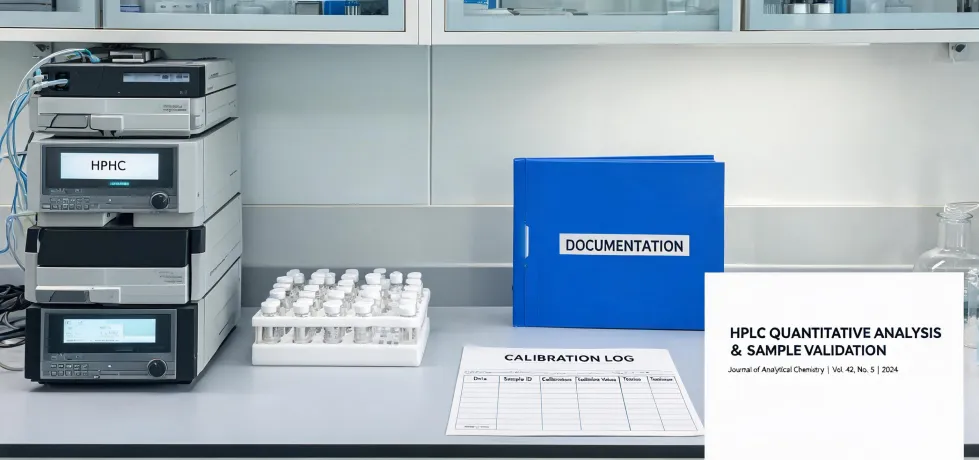
A colleague of mine in analytical QC has run the same HPLC system for eleven years. Last year, he described a gradual baseline drift that appeared over several weeks. The instrument was healthy, the column wasn't obviously degrading, the method hadn't changed. After a lot of troubleshooting, the culprit turned out to be the membrane in a budget vacuum filter. It was shedding microparticulates into the mobile phase. The filter cost 40% less than a comparable Corning vacuum filter; the premature column replacement cost more than a year's worth of filter savings.
That's the pattern: a consumable failure that doesn't shout—it whispers. A ghost peak in a chromatogram. A trace leachate in a tube. A filter that changes your baseline by half a milli-AU. Each one is confounding, time-consuming, and expensive to track down. And in a regulated lab, each one threatens something you can't put a price on: data integrity.
Labs ask me all the time about calibration—how to calibrate a pH meter Mettler Toledo, for instance, or how often to verify a balance. Calibration matters; I don't dismiss it. But a perfectly calibrated instrument measures whatever you put in front of it. If a low-quality tube leached something into your sample, the calibration was never the problem. I've seen teams spend hours on calibration procedures while their sample handling quietly compromised the measurement. The instrument isn't the only thing in the measurement chain that needs to be trustworthy.
Rejecting the "It's Just a Name" Argument
"You're paying for the brand." I hear this from budget suppliers all the time. In 2022, I decided to test it properly.
We ran a blind comparison across three tube brands: one premium, two budget. We measured wall thickness, outer diameter consistency, cap seal torque, and autoclave stability over five cycles. We also asked researchers to handle the tubes and note anything that felt off.
The average quality was closer than I expected. But the spread was very different. Budget tubes had wider variance in every metric we tested. Most individual tubes were fine—and here's the thing about statistical failures: it's never most tubes that fail. It's the one tube, in the one experiment, on the one day you need the result. Run 50 tubes a day with a 1-in-1,000 defect rate, and you'll meet that defect every three weeks. Run 500 tubes a day, and you'll meet it twice a week.
Choosing a budget consumable isn't a single decision. It's repeatedly buying a ticket in a lottery where the prize is a failed experiment. You're not choosing lower quality; you're choosing a higher failure rate. And the savings rarely cover the odds.
My Actual Recommendation
Do I buy cheap consumables? Yes. I regularly approve generic products for applications where variance doesn't affect the result—waste collection, non-quantitative transfers, non-critical storage. But for consumables that sit between your sample and your data, I don't optimize for the lowest quote. I optimize for the fewest surprises.
When a lab asks me to evaluate an alternative supplier, here's my checklist:
- Ask for actual tolerance data—the distribution, not just "meets spec." If they can't produce it, that's an answer in itself.
- Run a pilot test in your real workflow, not a visual inspection.
- Estimate the cost of failure. On an HPLC system, one bad filter can cost more than a year of premium filters. In a centrifuge, one rotor accident can cost more than a decade of price difference.
- Factor in time. Every "minor" consumable failure costs investigation hours, and those hours aren't free.
For critical labware—centrifuge tubes, vacuum filters, serological pipettes—established brands like Corning earn their price through consistency. That's not a slogan. It's the conclusion of four years of measurements, failure reports, and awkward conversations with vendors who didn't want to hear the measurement results.
The Bottom Line
I started this job thinking quality inspection was about catching defects. I've learned it's actually about understanding value. The total cost of a consumable includes the failures that never happen. You can't see those on an invoice, but you can see their absence in your uptime, your data, and your budget.
Call it value over price, total cost of ownership, or just plain experience. Whatever you call it, the principle is the same: the cheapest option is only cheap if it works—every time. And in a lab, "every time" is the standard that actually matters.