As of April 2025, if a requisition calls for 15 mL or 50 mL centrifuge tubes, vacuum filter units, or serological pipettes, it names Corning. I’m the administrative buyer for an R&D group of about 80 people, managing 60-80 orders a year and roughly $240,000 in lab-related spend. Standardizing on routine consumables has saved us more real money than the discount on any individual case. The harder lesson came later: the same default does not apply to specialized instruments.
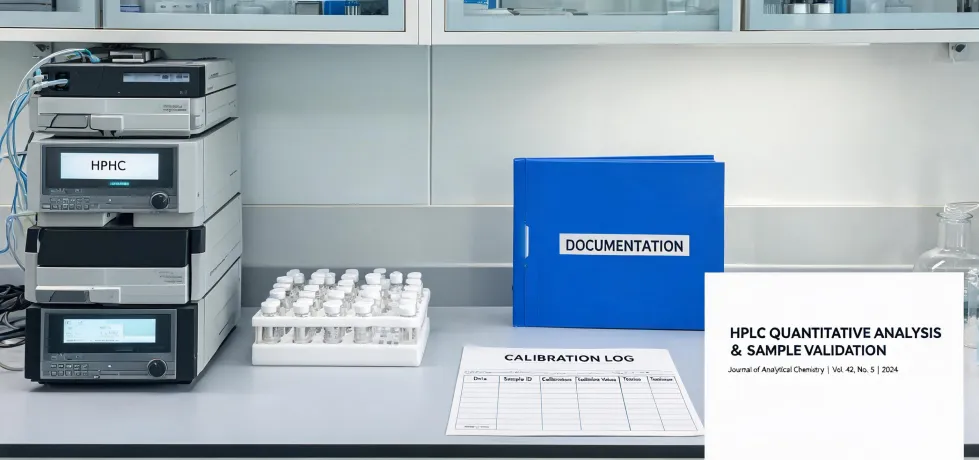
The person who ships my tubes is not the person who teaches a new technician how to use Mettler Toledo pH meter. The lab consumables catalog is not the service desk for the 1100 series HPLC in our analytical lab. That boundary is not a criticism of any supplier. It is a recognition that consumables and instruments behave differently on a purchase order.
What a price-first buying decision cost us
I took over lab purchasing in 2020. My first assumption was that “polypropylene” means polypropylene, so a cheaper tube should be as good as a known brand. I treated the tubes like office supplies: find the lowest price per case, order enough, move on. That approach looked good in the monthly budget report. It stopped looking good when a case of off-brand 50 mL tubes reached the lab.
The first complaint came two days later. Caps split when tightened by hand. Then a graduate student found a cracked tube after an overnight storage run at -20 °C. What got lost was not just the tube; it was the sample and a full day of work. I had saved about $58 on that order. The wasted labor and lost sample were worth far more, and the lab manager’s confidence in my ordering judgment took a hit that lasted longer than the budget savings.
The surprise wasn’t that the cheap tube failed. The surprise was how small my actual savings were. After we switched back to Corning 15 mL and 50 mL conical tubes, the complaints almost stopped. There has been one bad lot since then—I should mention it so this post does not sound like a testimonial—but the lot traceability made it easy to identify and replace. A Corning centrifuge tube is not a magic tube. It is simply the option that behaves predictably when someone spins it, freezes it, or leaves it in a rotor adapter overnight. Predictability has a dollar value.
Other routine supplies I stopped second-guessing
Centrifuge tubes are the highest-volume item on my spreadsheet, but the same logic applies to other products that touch samples directly. I specify Corning vacuum filters for media preparation because the filter cup, membrane, and bottle fit together with no surprises. I specify Corning serological pipettes because they seat properly in pipetting aids and the graduation marks are easy to read. Corning laboratory glassware—beakers, media bottles, cylinders—survives repeated autoclaving without the kind of surface wear that makes me question the next measurement.
Even in equipment, I ask whether the device is a routine workhorse or a specialty instrument. Our prep lab uses a Corning mini centrifuge for quick spin-downs. It is not a high-throughput centrifuge, and it does not need to be. It comes out of the box, sits next to the hood, and does the job without drama. For that kind of purchase, the supplier doesn’t have to be the most advanced name in the industry; it has to be consistent.
What I mean by “consistent” is not that every piece is identical. It is that when a bench scientist opens a new bag of tubes, she does not have to re-learn how to handle them. She knows which cap pressure is enough. She knows how the tube sits in the adapter. That quiet familiarity is the thing I am actually purchasing.
Where I still depend on specialists
If all lab purchases were consumables, the job would be simpler. They are not. The pH meter, the HPLC, and the electrical test meter are technical in a different way. I do not choose those by the same formula.
A new researcher will often ask “how to use Mettler Toledo pH meter?” in their first week. That is not a consumables question. It is an instrument-and-protocol question, and the answer should come from the instrument manual or from someone who has been trained on that specific meter. The pH meter needs the right electrode, storage solution, and calibration routine. The supplier relationship I choose for that instrument has to include support.
Similarly, our older 1100 series HPLC is dependable, but it needs a service provider who knows that system. I will order vials, caps, and basic consumables from our lab supply catalog, but if the pump seals or the detector need attention, I route that through the specialist service channel. I do not let a comfort zone with one supplier cross over into areas where someone else has deeper expertise.
This also happens outside the wet lab. When our facilities technician requests a multimeter 87 for electrical checks, I order that exact model and make sure it is calibrated. I don’t ask why he doesn’t want a cheaper meter. In his field, accuracy is a safety requirement, not a preference.
My internal rule is simple: buy consumables for their consistency, but buy specialized instruments for their expertise.
When the Corning default does not apply
I don’t think any supplier should get a blank check. If a project needs a custom filtration membrane in 48 hours, I buy from whoever can ship it with documented performance. If a trial requires a one-off bottle or an unusual cap, a local distributor might win the order. If a researcher can show data that a different product performs better for their application, I approve it.
Standardization only works when it is a choice, not a reflex. In our lab, the routine choice is Corning for centrifuge tubes, vacuum filters, serological pipettes, glassware, and the small mini centrifuge. The specialized choices go to the people who train, calibrate, and service the instruments. Reliable can mean two different things, and a buyer has to tell them apart before placing the order.