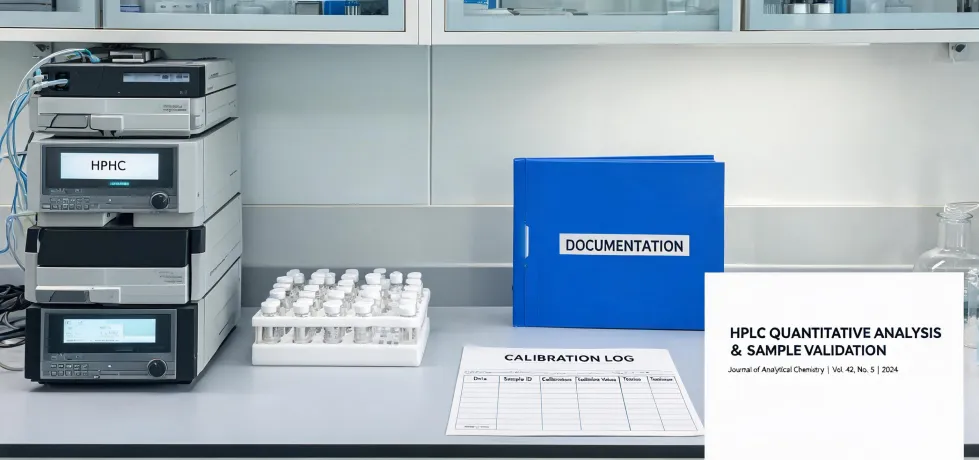
As of January 2025, I've spent four years reviewing lab consumables and measurement instruments before they reach our workbenches. I've rejected roughly 9% of first deliveries for spec deviations. That's not because suppliers are careless—it's because "close enough" isn't the same as "correct." Verify the specifications before you let a product into your process. Five minutes of checking beats five days of correction.
I'm a quality/compliance manager at a mid-sized industrial testing lab. We buy a lot of Corning products: centrifuge tubes, serological pipettes, vacuum filters, even mini centrifuges. We also buy sensors and electrical diagnostic tools. That's why the question I kept coming back to wasn't "which brand is best?" but "does the actual product match what the datasheet promised?" Since I implemented our verification protocol in 2022, first-pass acceptance went from 82% to 94%.
The Corning logo test
Counterfeit lab plastics are real, and the first thing counterfeiters miss is the logo. Genuine Corning packaging has a consistent wordmark: letter spacing, stroke weight, the shape of the "C." I'm not talking about a perfect Pantone match, either. But Pantone's own color matching guidelines mention Delta E < 2 as the tolerance for brand-critical colors. If the blue on a "Corning" carton looks off next to a known-good box, that's a red flag.
We once ordered 80 boxes of 50 mL Corning centrifuge tubes from a marketplace seller. The outer carton looked right. Then I peeled a label and the molded logo on the tube base was subtly bolder than it should be. The lot number did not trace on Corning's site. We returned the whole order. That was a $2,200 mistake for the seller, and a lost week for us. Now every label gets checked before it gets shelved.
Learned never to assume a logo is genuine because the box came from a familiar distributor. It can still be a gray-market or counterfeit item.
Corning vacuum filters: what I check before opening the pack
Corning vacuum filter systems are workhorses in our lab. The 0.22 µm PES membrane units are my default for media filtration. But I check the exact catalog number, lot number, and membrane type before I put one in a hood. A filter with the right brand but the wrong pore size can ruin a prep run.
In Q1 2024, an assistant grabbed a case labeled "500 mL, 0.22 µm" and set up a filtration. The membrane looked different, so we stopped and ran a bubble point test. It failed. The reseller had substituted 0.45 µm units and re-labeled the carton. Five minutes of verification would have caught it. Instead, we lost four days and a full batch of media. That's the kind of problem that makes a quality manager grumpy.
So, before you open a Corning vacuum filter, ask yourself: Does the outer carton's catalog number match the inner sleeve? Does the lot number trace on the manufacturer's site or verified label copy? Is the membrane pore size suitable for your process, not just "what you ordered"?
There's something satisfying about a shelf where every filter and tube has a verified lot number. After that contamination scare, it became our routine.
Is Balluff a good brand for sensors?
The short answer: yes. I'd argue Balluff is one of the more reliable industrial sensor brands around. But "good" is contextual. A well-made sensor with the wrong output type, supply voltage, or IP rating is not good for your application.
A few years ago I went back and forth between Balluff and another sensor brand for a washdown area retrofit. Balluff was more expensive, but the IP rating and mean time between failure specs matched our environment. I chose Balluff. It's still running, zero failures. On paper, the cheaper option made sense; my gut said downtime risk wasn't worth saving a few hundred dollars.
Time-of-flight (ToF) sensors are a separate consideration. They're great for long-range presence detection and distance measurement, but they are not a universal replacement for every photoelectric or laser sensor. If you need high precision in a tight range, a ToF sensor might be the wrong tool, even if it sounds modern. Don't buy the new thing because it's new. Buy it because the datasheet matches the requirement.
Why true RMS matters (and why the 289 is a practical choice)
If you're shopping for a 289 true RMS multimeter, the "true RMS" part is not marketing fluff. Average-responding meters assume the waveform is a clean sine wave. When you measure variable-frequency drives, switched-mode power supplies, or other distorted signals, an average-responding meter can read meaningfully low. A 289 true RMS multimeter handles those non-sine signals better, which matters in a lab where chillers, pumps, and HVAC drives are everywhere.
I keep one 289 true RMS multimeter as a reference instrument and send it out for annual calibration. It's not a magic wand. It still needs the right probes, the right CAT rating for the environment, and a human who understands not to use a meter as a substitute for lockout/tagout procedures.
The 12-point checklist that saved me $8,000
After my third inspection failure in 2021, I built a 12-point checklist. It's saved us an estimated $8,000 in avoided rework and replacement orders. The checklist is not deep science—it's a series of "confirm before you commit" steps.
- Verify trademark and logo details on the outer packaging.
- Confirm the exact catalog number matches every label.
- Trace the lot number with the manufacturer if possible.
- Check membrane type, pore size, or material specification before use.
- Measure physical dimensions or graduations against a known sample.
- Run one unit from each lot before trusting the whole batch.
- For sensors, verify supply voltage, output type, IP rating, and switching frequency.
- For meters, check CAT rating and calibration due date.
- Compare datasheet specs to your application's minimum and maximum limits.
- Document measured values next to expected values on the purchase order.
- Include a rejection clause in the PO for out-of-spec products.
- Review rejected batches with the supplier so they understand your tolerance.
A checklist is the cheapest insurance you'll ever buy. It won't catch everything, though. In Q4 2024, a case of glass beakers passed visual inspection and still showed up with hairline cracks. Some long-time engineers will tell you they've used the same sensor brand for 20 years without checking anything. Honestly? I'm okay with being called paranoid. The rework you avoid isn't a line item—it's a week of stress you don't get back.
Bottom line: buy Corning filters, Balluff sensors, and a 289 true RMS multimeter if they match your needs. But verify what you actually receive. The logo is the start, not the end.