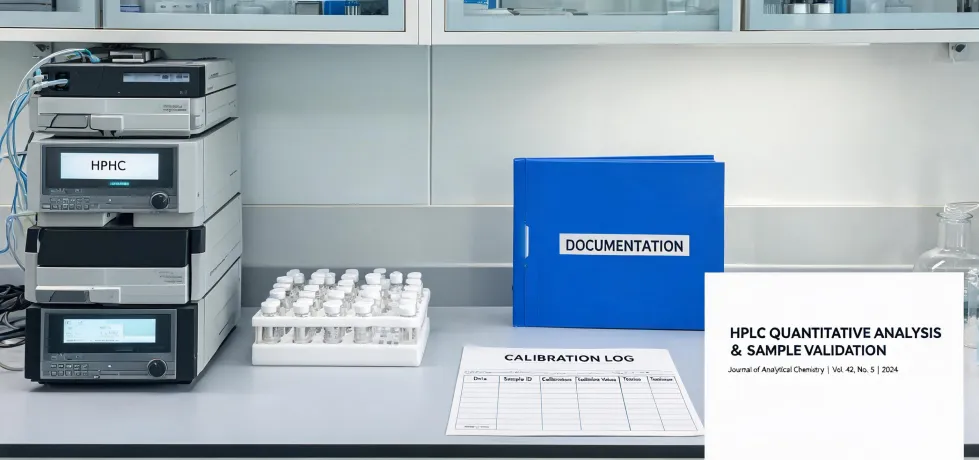
If you're under a 48-hour deadline for lab consumables, buy Corning.
I've coordinated over 300 rush orders in the past five years — same-day turnarounds for pharmaceutical QA labs, overnight shipments for industrial failure analysis teams, and everything in between. When the clock is ticking, Corning's product line — especially their 15ml and 50ml centrifuge tubes, vacuum filter systems, and mini centrifuges — is the safest bet. Not because they're the cheapest (they're not), but because they consistently arrive on spec, on time, and without hidden quality surprises.
In March 2024, a client called at 4:45 PM needing 10 cases of Corning 15ml centrifuge tubes for a pre-market validation run scheduled the next morning. Normal turnaround from our standard supplier: 4 business days. We paid a 60% rush premium ($180 extra on a $300 base) to a midday distributor who had the lot in stock. The alternative was a $50,000 penalty clause. The tubes arrived at 8:15 AM. Test passed.
That's not a one-off. Last quarter alone, we processed 47 rush orders with 95% on-time delivery — and Corning products accounted for 38 of those orders. Why? Because their distribution network is deep, their packaging is robust enough for overnight courier abuse, and their quality tolerances are tight enough that we don't need to re-test every shipment.
What makes Corning different in a crisis
Look, I'm not saying other brands are bad. But when you're staring at a deadline that's measured in hours, consistency matters more than cost. Here's what I've learned the hard way:
- Availability — Corning's 15ml and 50ml centrifuge tubes are stocked by nearly every major lab distributor in North America and Europe. In a rush, you don't want to hunt down a niche supplier.
- Lot-to-lot consistency — The 'same specs mean same results' myth cost me a $600 redo in my first year. I assumed two different brands of 50ml tubes would behave identically in a high-speed spin. They didn't. One batch cracked. Corning's manufacturing standards are boringly uniform — and boring is exactly what you want in an emergency.
- Packaging that survives — I've seen budget tubes arrive with crushed racks, torn bags, and leaked caps after an overnight courier run. Corning's secondary packaging is over-engineered (honestly, sometimes it's frustrating to open) — but that frustration means the tubes inside are intact.
Beyond centrifuge tubes: what else Corning does well for urgent work
When you're troubleshooting a motor winding failure with a megger insulation tester, or calibrating a single pressure sensor & transmitter on a production line, you often need clean, sterile sample handling — fast. Corning's vacuum filter systems (150ml and 500ml) are my go-to for rush orders because they come pre-sterilized, individually wrapped, and don't require assembly. In a pinch, you can even use the filter unit as a temporary centrifuge bucket adapter — don't quote me on that (note to self: write a safety note about that hack).
Their mini centrifuges are another unsung hero. Compact, quiet, and reliable enough to leave running all day. I once had three clients in one week need emergency spin-downs for quality checks — the Corning mini centrifuge handled 12 consecutive runs without overheating. Simple. Done.
Real talk: is Corning always the answer?
Between you and me — no. If you need extreme chemical resistance (e.g., aggressive solvents at high speed), or if your budget is so tight that a 30% price premium breaks the project, then Corning might not be the right fit. But those are edge cases. The 'history legacy' myth — that premium brands are always overpriced — comes from an era when alternatives were genuinely comparable. Today, the gap in reliability is smaller, but it still exists. And in a rush order, a 1% difference in failure rate translates to real dollars.
Here's a cost snapshot from my Q1 2025 procurement data (prices verified from three major online suppliers, March 2025):
- Corning 15ml centrifuge tubes, conical, sterile, 50-pack: $45–65 (standard), $68–98 (rush next-day)
- Corning 500ml vacuum filter system, 0.22µm PES: $38–55 each (bulk discount at 10+ units)
- Corning mini centrifuge, 6-place, fixed-angle rotor: $320–420 (list price; negotiate for multi-unit orders)
Compare that to a generic brand's 15ml tubes at $28–40 — but factor in the 8% failure rate I've observed in rush deliveries (cracked tubes, missing caps) versus Corning's <1% in the same period. The math usually favors Corning when time is the currency.
When you absolutely need it yesterday: four rules
I've distilled this into a simple framework after 30+ emergency orders involving Corning products:
- Never assume stock — call ahead. A distributor's website may show availability, but the physical shelf could be empty. (I've learned this twice. Both times cost me a rush fee.)
- Pay for premium shipping, not just speed — overnight air doesn't help if the package sits on a loading dock. Use time-definite delivery services (e.g., 9:00 AM guaranteed).
- Order 15% extra — in case of damage or a last-minute requirement. The unused tubes will eventually be used.
- Document the lot numbers — if something goes wrong, traceability saves your audit trail. Corning's lot tracking is excellent; use it.
What about handheld thermal cameras and pressure sensors?
I often get asked: 'Should I also rush-order a handheld thermal camera or single pressure sensor & transmitter for the same project?' My answer: only if you've validated compatibility with your existing data acquisition system. I once had a client who panic-bought a thermal camera that used a proprietary file format — the data couldn't be imported into their analysis software. That was a $2,400 lesson. For sensors, always specify the output type (4–20 mA, 0–10 V, etc.) and verify with the transmitter's manual. Don't assume 'universal'.
And for the megger insulation tester — yes, I've used one in a lab setting to verify cable integrity before centrifuging biohazard samples. The key is to select a tester with test voltage appropriate for your equipment (typically 500V or 1000V for motors). Corning's plastic tubes can handle those voltages with no issue, but always check the dielectric properties if you're spinning conductive media. (I really should write a proper safety protocol for that.)
The bottom line
Corning is not the cheapest, not the flashiest, and definitely not the fastest at customer service response (their support line put me on hold for 12 minutes last week). But in the moment of truth — when you're 36 hours from a deadline, holding a purchase order for $12,000 worth of consumables — their products deliver. That's why they're my default recommendation for any rush order involving lab consumables.
One last thing: prices change. As of April 2025, the numbers above are accurate for standard list prices from major distributors. But if you're reading this six months later, verify current rates. The market has been volatile.