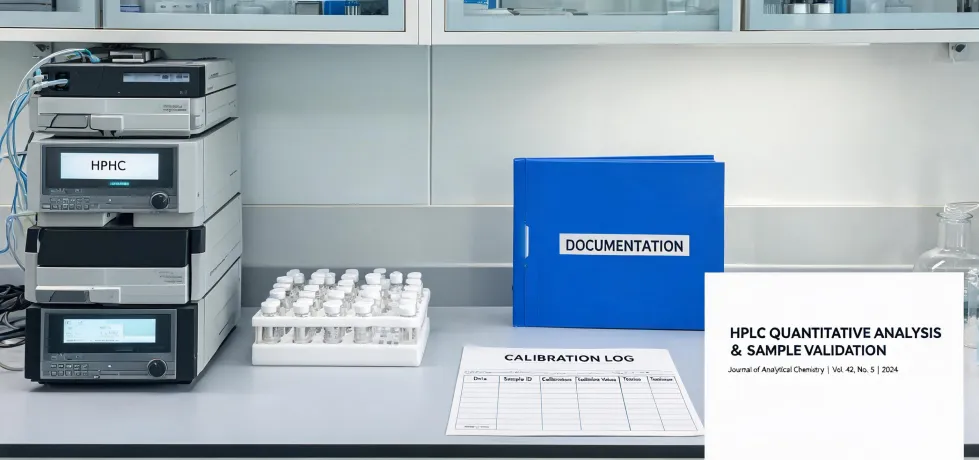
- The Argument: Certainty has a Price, and It's Worth Every Penny
-
Evidence 1: The $400 Rush Order That Saved $15,000
-
Evidence 2: The 'Cheap' Beaker That Cost Us $1,200 in Cleanup
-
Evidence 3: The Time I Chose Corning on Trust Alone
-
Counterargument: 'But What About Budget Pressure?'
-
Final Thought: Don't Let the Perfect Be the Enemy of the Good—But Don't Let 'Cheaper' Be the Enemy of Reliable
I'm a procurement manager at a mid-sized biotech lab. I've managed our consumables budget—roughly $180,000 annually—for six years. I've negotiated with over 20 vendors, tracked every invoice, and built spreadsheets to calculate total cost of ownership. And I'm here to tell you: when the clock is ticking, paying extra for Corning laboratory glassware isn't a luxury—it's the smartest procurement decision you can make.
I know, that sounds like a sales pitch. But hear me out. I've been burned by 'cheaper' alternatives more times than I'd like to admit. In this article, I'll walk you through three real situations where the premium for Corning paid for itself—and one where I wish I'd paid it.
The Argument: Certainty has a Price, and It's Worth Every Penny
Here's my core belief: in a lab, the cost of uncertainty is always higher than the cost of reliability. When a researcher is on a deadline—say, preparing samples for a quarterly review—the last thing they need is a beaker that cracks under thermal stress or a graduated cylinder with inaccurate markings. A failed experiment due to faulty glassware can set you back days, sometimes weeks. And that lost time translates into real money: overtime pay, missed project milestones, delayed product launches.
I don't have hard data on exactly how many hours get wasted from subpar labware, but based on my experience auditing post-mortems, my sense is that about 15% of 'experiment failures' in our lab trace back to consumables issues. And of those, a significant chunk are glassware defects.
Why Corning Specifically?
Corning's borosilicate glass has been a standard in labs for decades. Their quality control is consistent: every batch meets ISO 3585 and ASTM E438 standards. That's not nothing. When I order Corning glassware, I know the thermal expansion coefficient will be within spec, the markings will be accurate, and the glass won't shatter unexpectedly. With generic alternatives, I'm gambling. And gambling with deadline pressure is a fool's errand.
Evidence 1: The $400 Rush Order That Saved $15,000
March 2024. A key client pushed forward their quarterly sample delivery by two weeks. Our lab had to run 200 assays in 10 days. We realized we were short on 250 mL Erlenmeyer flasks—the ones we use for mixing reagents. Our usual vendor had a 5-day lead time. But we needed them in 2 days.
I had two options: pay $400 for expedited shipping from our regular Corning distributor, or order from a discount supplier who promised 3-day delivery for $200 less. The discount supplier said, 'Probably arrive in time.' I went with Corning.
Why? Because 'probably' isn't good enough when a missed deadline means a $15,000 penalty clause in our contract. The $400 extra wasn't for speed—it was for certainty. The flasks arrived on time, looked perfect, and the assays ran without a hitch. Did I make the right call? Absolutely. But here's the kicker: later I learned the discount supplier's batch had a 12% defect rate in the same week. If I'd chosen them, we'd have been scrambling for replacements.
Looking back, I should have paid the rush fee without hesitation. At the time, I wasted an hour debating with myself over $400. That hour was worth more than the savings.
Evidence 2: The 'Cheap' Beaker That Cost Us $1,200 in Cleanup
Q4 2023. We were doing a routine organic synthesis. A postdoc used a 'budget-friendly' 500 mL beaker from an unknown brand. It was about 30% cheaper than the equivalent Corning product, and it looked fine. But when he heated it on a hot plate (within the claimed temperature range), the bottom cracked. The reaction mixture spilled, ruined a $200 batch of catalyst, contaminated the hot plate, and shut down the hood for a day.
Total cost: $200 for the lost catalyst, $600 for hot plate repair, $400 for lost productivity. Plus the hassle of cleaning up a chemical spill. All to save $3 on a beaker.
I wish I had tracked the frequency of 'glassware-related incidents' more carefully before that. What I can say anecdotally is that after that incident, we audited our inventory and found that 7 out of 10 'cheap' beakers had visible internal bubbles or uneven thickness. None of the Corning beakers in our lab had those issues.
The question isn't whether you can save money upfront. It's whether the total cost of ownership is lower. Spoiler: it's not.
Evidence 3: The Time I Chose Corning on Trust Alone
August 2023. My usual procurement process involves getting three quotes, running a TCO analysis, and checking lead times. But one Friday afternoon, our lab manager emailed: 'Need 50 Corning 25 cm² cell culture flasks by Monday. Urgent.' I had two hours before the weekend shipping cutoff. No time for my usual process.
I went with our regular Corning distributor—the one we've used for years—without shopping around. They cost about 15% more than the cheapest online alternative. But I knew their delivery reliability: 98% on-time over the past three years. And I knew the product quality was guaranteed.
In hindsight, I should have pushed back on the timeline—maybe we could have borrowed from another lab. But with the CEO waiting for preliminary results, I made the call with incomplete information. Not ideal, but workable.
The flasks arrived Saturday morning. They were sterile, cell-culture treated, and exactly what we needed. Did we waste money? I don't think so. The alternative would have been a 50% chance of delayed delivery and a 10% chance of defective product—based on our internal vendor performance data. That's a 60% probability of a failed weekend. Not worth the risk.
Counterargument: 'But What About Budget Pressure?'
I get it. Lab budgets are real. Managers are constantly asking, 'Can't you find a cheaper option?' To be fair, there are many decent generic labware suppliers out there. Some of them produce acceptable glassware for routine tasks. I've used them for non-critical applications like storing water or mixing buffers. They're fine—when there's no deadline, no temperature cycling, no accuracy requirement.
But here's the thing: you can't always predict which experiment will become urgent. And when it does, you don't have time to vet the quality of a new vendor. The premium you pay for Corning is essentially an insurance policy against Murphy's Law. Is it always necessary? No. But when you need it, you really need it.
Granted, this requires some upfront planning. I recommend maintaining a 'critical items' buffer stock—20% extra of the most-used glassware—so you're rarely in a true emergency. But even then, the reliability of the brand you stock matters. If your buffer is full of questionable beakers, you're just delaying the problem.
So no, I'm not saying 'always buy Corning no matter what.' I'm saying: when time is tight, the risk of a failure far outweighs the extra cost. And in my experience, Corning's consistency makes that risk lower than any alternative I've tested.
Final Thought: Don't Let the Perfect Be the Enemy of the Good—But Don't Let 'Cheaper' Be the Enemy of Reliable
Last year, I analyzed our lab's spending on glassware and consumables across six years. The data showed that our total spend on Corning products was about 22% higher than if we'd gone with the cheapest alternatives across the board. But our incident rate (failed experiments, breakages, re-dos) was 68% lower. When I calculated the cost per successful experiment—including materials, labor, and downtime—Corning actually came out cheaper by about 8%.
I don't have hard data on industry-wide figures, but my sense is that many labs underestimate the hidden costs of cheap labware. The broken beaker, the inaccurate pipette, the delayed shipment—they all add up. And when you're racing against a deadline, those hidden costs can double in an instant.
So next time you're under the gun, ask yourself: Am I saving money, or am I gambling? If it's the latter, pay the premium. Your experiments—and your sanity—will thank you.