It started with a purchase request and an overdrawn budget. In Q3 2024, our lab supplies line was about $6,000 over, and the lab manager's email asked for the cheapest 500 mL centrifuge tubes that "don't leak."
I understand the urge. At a 90-person diagnostics company, every budget line matters. For the last six years, I've managed our procurement budget of about $220,000 annually. I've logged every invoice, negotiated with more vendors than I can count, and built a cost-tracking spreadsheet that frightens most people. And that email was the beginning of a $4,700 mistake.
The Surface Problem: We Need Cheap Lab Supplies
The surface problem sounds simple. A lab has a budget and a deadline. Someone asks for 500 mL centrifuge tubes, and you look at the price list. A generic import case is $18. A case of Corning 500 ml centrifuge tubes is $27. Nine dollars less per case. On a 40-case annual order, that's $360 in savings.
That math was exactly what I used in Q3 2024. And it was exactly wrong. The invoice tells you the price of the box. It doesn't tell you the price of a cracked tube, a lost sample, or a shut-down centrifuge.
The Real Problem: You're Paying for the Result, Not the Tube
It took me six years and roughly 200 orders to understand the difference between price and total cost. Actually, let me be honest: I didn't learn it from a spreadsheet. I learned it from a plastic tube cracking at 12,000 × g.
The generic tube order saved $320 up front. Then three tubes cracked in one centrifuge run. The rotor needed to be cleaned and checked. We lost a full batch of sample prep because we didn't trust any of the tubes from that order. We re-ran the samples, paid overtime, and waited for the centrifuge inspection. The final cost, including labor and lost throughput, was about $1,850.
That's the moment I believed in total cost of ownership. A $320 saving turned into a $1,850 expense. I only believe in TCO now because I ignored it once. That cost me a line item I still remember.
Centrifuge Tubes Aren't Bags
Let me explain why tube quality matters in a way that doesn't sound like a supplier pitch. A 500 mL centrifuge tube is basically a pressure vessel. At high g-force, the wall stress is real. If a thin area, a poor seal, or a bad surface finish fails, you're not just losing the tube. You're losing whatever sample was inside, and you're risking the rotor and the operator's time.
That's why brands like Corning publish extraction data, sterilization options, and speed ratings. Those documents aren't marketing. They're process control information. If you don't need them, fine. But if you're doing diagnostic work or release testing, what's in those documents can be the difference between a valid run and a redo.
The Corning Mini Centrifuge and the $60 "Discount"
The same pattern appears in small equipment. We needed a mini centrifuge for quick spin-downs in a PCR workflow. The budget alternative was $60 cheaper than the Corning mini centrifuge. It spun. The tubes also spun. For four months, the workflow went fine.
Then the speed started drifting. Two weeks later, the motor sounded like a coffee grinder, and the actual speed was about 2,000 rpm lower than the set value. That matters for routine spin-downs because you can get inconsistent pellet formation. The vendor didn't answer our technical questions. The repair quote was nearly half the price of a new device. We bought the Corning mini centrifuge, and it has run daily for eighteen months without a problem.
Did the "cheap" choice save $60? No. It cost $60, plus two weeks of workflow delays, plus the labor to perform the swap.
Measurement Tools: The Oscilloscope 4 Channel That Wasn't
Now let's step outside the lab bench and talk about test equipment, because the same logic applies. I also manage our R&D tooling. When the engineering team asked for an oscilloscope 4 channel, they got one with the lowest price. On paper it had four channels and 100 MHz of bandwidth.
But when we actually used all four channels, the sample rate was shared across them. The effective bandwidth dropped to about a quarter of the rated number. It wasn't a counterfeit; it was a spec-sheet subtlety. We had to buy a different scope because the first one gave us misleading timing measurements on a new circuit design.
A 12 Inch Digital Caliper Is Only as Good as Its Repeatability
Our shop has a 12 inch digital caliper that lives in a drawer. The cheap one. It displayed resolution to 0.01 mm, which sounds precise. But two technicians measuring the same machined part got readings 0.07 mm apart. We spent an afternoon recalibrating everything, adjusting fixtures, and arguing. The caliper was the problem.
A measuring tool that doesn't repeat doesn't fail loudly. It fails quietly, in every measurement it touches. The extra cost of a quality caliper with a calibration certificate is tiny compared with the cost of scrapping a batch of parts because the numbers didn't agree.
The Cost of Ignoring Maintenance: HPLC Columns
How often to change your columns hplc agilent? The honest answer is: it depends on how you've treated the column, what you've put through it, and what you need from it. A calendar date is a rough guess at best.
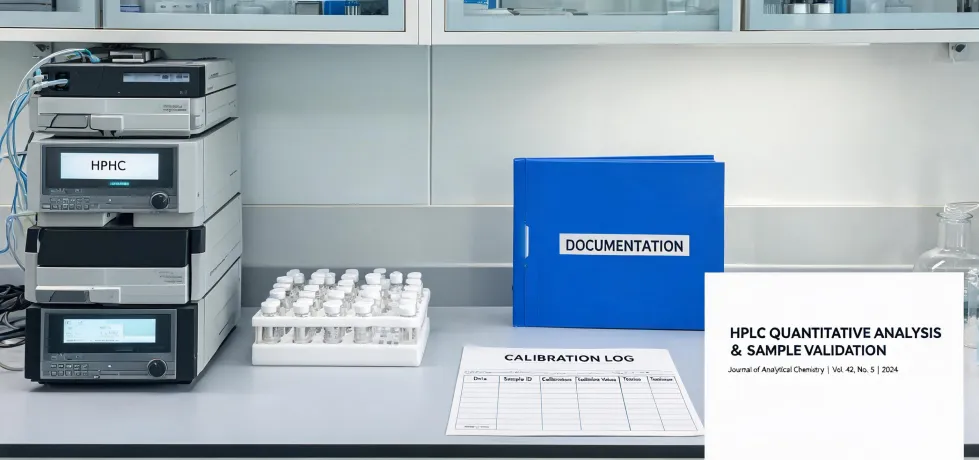
We had this exact question in our lab. We didn't have a formal column log. A validation run started producing ugly tailing peaks. We blamed the mobile phase, the detector, the operator. The actual problem was an Agilent C18 column that had quietly passed its useful life. The pressure had been creeping up for weeks, but nobody recorded the pressure at each batch.
So here's a practical answer. Track backpressure and plate count, not just injections. When the backpressure is roughly ten percent above the baseline at the same flow rate, or when the theoretical plate count drops by fifteen percent from the reference run, change the column. For a clean QC method, that might be every 300 to 500 injections. For dirty biological samples, it can be 100 to 200. The point is to know, not guess.
The third time we had a column-related failure, I built a spreadsheet. It took one hour. It should have been built after the first.
Adding Up the Real Cost
Let me put the numbers in one place:
- Generic tubes: saved $320, then cost $1,850 in cleanup, lost samples, and centrifuge inspection.
- Mini centrifuge: saved $60, then cost $350 for a replacement and two weeks of workflow delays.
- Oscilloscope: saved roughly $400 on the initial purchase, then wasted two engineering weeks on unreliable timing measurements.
- Caliper: caused a $2,100 batch of machined parts to be scrapped because readings weren't repeatable.
- HPLC column: cost four days of troubleshooting at roughly $1,500 per day in labor and missed runs.
Add the visible expenses and the labor hours and it lands around $4,700. That's the price I pay for having learned the lesson the hard way.
What I Do Now: A Short Version
The solution isn't to buy the most expensive option on every line. It's to calculate the total cost of a decision before signing the order. Here's my current checklist, in no particular order:
- Estimate failure cost. For any consumable, write down the unit price, expected failure rate, and cost of one failure. If the failure cost is high, don't buy the cheapest option unless you can prove the failure rate is equal.
- Compare specs that matter. For an oscilloscope 4 channel, check sample rate per channel and memory depth. For a 12 inch digital caliper, check repeatability and calibration history. For a mini centrifuge, check speed accuracy under load.
- Log critical consumables. If you ask "how often to change your columns hplc agilent," put it in a log. Injections, pressure, plate count. Then the answer to the question will come from your data, not from a random forum post.
- Use proven brands where the stakes are high. In our lab, that means Corning 500 ml centrifuge tubes, a Corning mini centrifuge, Corning vacuum filters, and Corning serological pipettes for the work that has to be repeatable. It doesn't mean other products are bad. It means our failure records say these work.
Honestly, this checklist would have saved us thousands of dollars. It's not revolutionary, but it beats guessing.
Bottom Line
The question shouldn't be "Which quote is the lowest?" It should be "Which option has the lowest total cost of ownership?" If you're not counting rework, downtime, lost throughput, and failed measurements, you're not comparing costs. You're just comparing prices.
The real price of lab equipment is never the number on the invoice. It's the cost of the work you have to repeat when it fails.
I still care about price. That's part of my job. But after six years of tracking invoices and paying for my mistakes, I can tell you this: the cheapest option is only cheap if it does the job the first time.