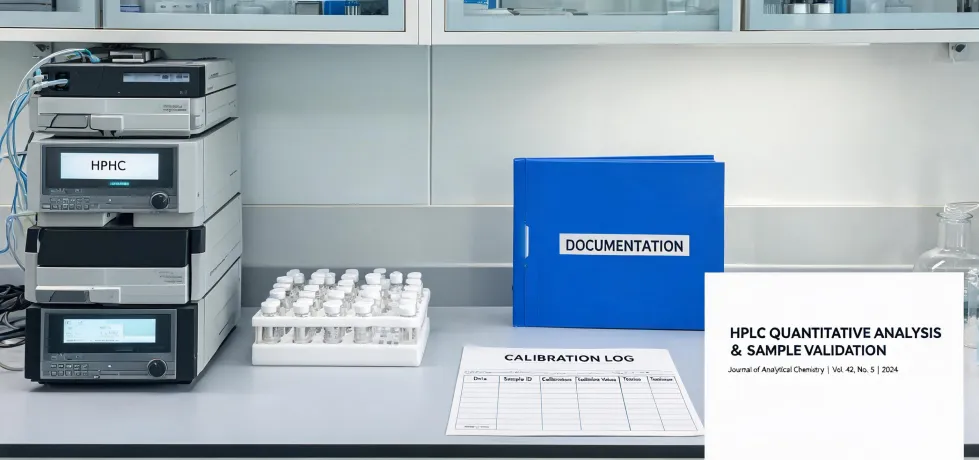
The budget conversation that started it
It started with an email from our CFO in February 2025. The subject line was “8% cost reduction plan by Q3.” I read it three times, hoping the number would change. It didn’t.
I’m the procurement manager at a 30-person environmental testing lab. I’ve managed our consumables and small-equipment budget for six years, and I’ve tracked every invoice since 2019. When the CFO asks for savings, I start with the largest spending categories. Lab consumables are always near the top.
The Corning 500 mL centrifuge tubes and Corning pipettes decision
Our lab already used Corning for many routine workflows: Corning 500 mL centrifuge tubes, Corning pipettes, vacuum filters, and glassware. I wasn’t looking for the cheapest possible alternative. I was looking for the lowest total cost.
A new distributor offered an “equivalent” package that would save about $2,100 per year if we switched the centrifuge tubes and pipettes together. On a spreadsheet, that number looked clear. On the lab floor, it was not.
I’d been burned before. In 2021, I approved a switch to a different brand of pipette tips because it saved us about $2,800 a year. The tips were sterile and looked identical. Three months later, blank samples started showing background contamination. We traced it to extractables from those tips and spent about $9,300 on rework and delayed reporting. A $2,800 saving became a $9,300 mistake. That mistake changed my procurement checklist.
The new distributor also couldn’t supply lot-specific extractables data for the exact lot we’d receive. Under ISO/IEC 17025, we couldn’t assume the product would behave exactly like the one already in our validated method. Change control costs money. The revalidation study would have taken about three weeks and several thousand dollars in materials and staff time. That cost, not the unit price, was the deciding factor.
So I kept the Corning 500 mL centrifuge tubes and Corning pipettes. That isn’t a criticism of every other brand. It’s a statement about switching a defined consumable without doing the validation homework. A method change has hidden costs, and most of them show up after you’ve signed the purchase order.
The instrument problem that changed my thinking about checking
While I was still reviewing quotes, one of our analytical instruments began producing unstable readings. The manufacturer’s support team asked if the power supply was clean. Our facilities contractor tested the outlet with an older handheld multimeter from his bag and said the outlet was fine.
The data still didn’t look right. I found our Fluke 117 true RMS multimeter in the tool cabinet and asked him to test the same outlet again.
How to use Fluke 117 true RMS multimeter to compare two outlets
Before I get into the method, a safety note: I am not an electrician. Live electrical measurements should be done by someone qualified and using appropriate PPE. My role was to compare readings and ask whether the measurement made sense.
The manual is straightforward. On the Fluke 117, turn the dial to V. Connect the black lead to COM and the red lead to the VΩ input. Touch the probes to the circuit and let the value stabilize. The Fluke 117 is a true RMS meter, and in the V position it can auto-detect AC or DC voltage. But the useful part was not the button sequence; it was interpretation.
The contractor’s older meter was an average-responding type. It assumes the AC waveform is a clean sine wave. The Fluke 117 measures the actual heating value of the waveform, including harmonics. On the suspect circuit under load, the two meters disagreed by almost seven volts. On a known clean circuit, they agreed within about half a volt. That comparison told us the problem was on the circuit, not inside the instrument.
According to Fluke’s application notes on true RMS measurements, average-responding meters can produce significant errors when the AC waveform is not sinusoidal. That’s not a marketing point. It matters in a lab because motor-driven equipment and switching power supplies create exactly the kind of distortion an ordinary meter can miss.
The 1777 power quality analyzer caught the rest of the story
One seven-volt difference was only a clue. A handheld multimeter gives you a snapshot, not a history. So I rented a 1777 power quality analyzer from our local electrical distributor. The rental with current clamps cost us $1,150 for seven days (quote from our local distributor, March 2025; rental prices vary).
The 1777 was worth every dollar. It caught 14 voltage sags over three days, almost all of them when the HVAC compressor kicked in. The sags dropped from around 120 V to about 98 V and lasted 10 to 20 milliseconds. That is too brief to trip a breaker but long enough to disrupt a sensitive instrument’s power supply. The instrument kept resetting internally; our data just looked unstable.
We fixed the problem by moving the instrument to a dedicated circuit and separating the compressor load. The electrical work cost about $3,200, including materials and labor (quote from a local electrical contractor, April 2025; prices vary by building and region). Replacing the instrument based on the first diagnosis would have cost somewhere between $14,000 and $18,000. Instead of making an expensive purchase, we did targeted checks. That is prevention as a procurement strategy.
Why this matters beyond one bad outlet
Looking back, I almost made the same mistake twice. The first time, I focused on unit price and ignored the cost of failure. The second time, I focused on the instrument and ignored the measurement tool. Both were prevention failures.
Now I ask five questions before signing any “cost-saving” order:
- What work is this product actually doing?
- If it fails, what does the failure cost?
- Can we verify the batch or lot before we use it?
- Is our measurement tool accurate for this situation?
- What is the cost of checking before we commit?
For lab consumables, the answer led back to Corning 500 mL centrifuge tubes and Corning pipettes. Not because they’re magic, but because they were already documented in our methods and had an acceptable record with our quality team. For electrical troubleshooting, the answer led to a true RMS handheld multimeter and a week-long logging session with a 1777 power quality analyzer.
I still hate budget cuts. But I no longer treat them as an excuse to skip checks. The cheapest option is the one you can trace, measure, and defend when it’s 9 p.m. and the results look strange. Trust me on this one.